Could you tell us about your professional background in a few words?
Dominique Kørvell
I originally worked as a graphic designer before becoming self-employed in trade and retail. I have been self-employed for more than 25 years.
The story of Salatboden actually began by chance about six years ago. I signed up for a free three-day Instagram course because I knew absolutely nothing about Instagram. I had heard that it was important for businesses to have a presence on social media and wanted to help my husband with his company.
When the course started, I realised that I needed a profile to practice on every day. At the time, I only had a private Instagram account that I barely used except for the occasional holiday photo — usually uploaded with help from my sons!
I have always been passionate about cooking, especially vegetables and salads. Salad has always been the highlight of my plate, and I make one every single day. So I decided to create a practice account where I could share salad recipes during the three-day course. I found an available Instagram name containing the word “salad”, and Salatboden was born.
Followers quickly started joining, and today more than 140,000 people follow along for my salad recipes and inspiration.
Susanne Geert
My professional journey actually grew out of an unexpected turn my life took during a difficult period. When my daughter turned 1 year old, she was diagnosed with leukemia and went through 3 intense years of treatment. To care for her, I had to take a leave of absence from my job as a project manager within communication and branding. Her compromised immune system meant we had to live in isolation, both at the hospital and at home.
As we gradually transitioned to spending more time at home, I wanted to take the first steps toward building a future business that integrated a long-lasting interest in photography with my background in communication. Since photographing people wasn’t an option at the time, I turned to food. I could cook it, style it, and practice my craft safely within our home. What started as a creative outlet in a challenging situation grew into a deep passion.
Today, I am a food, product, and branding photographer based in Denmark, serving an international clientele. I also work with strategic brand storytelling and teach tailored styling and photography workshops, blending commercial strategy with visual storytelling.
What was the creative vision and visual style for Salatboden?
Dominique Kørvell
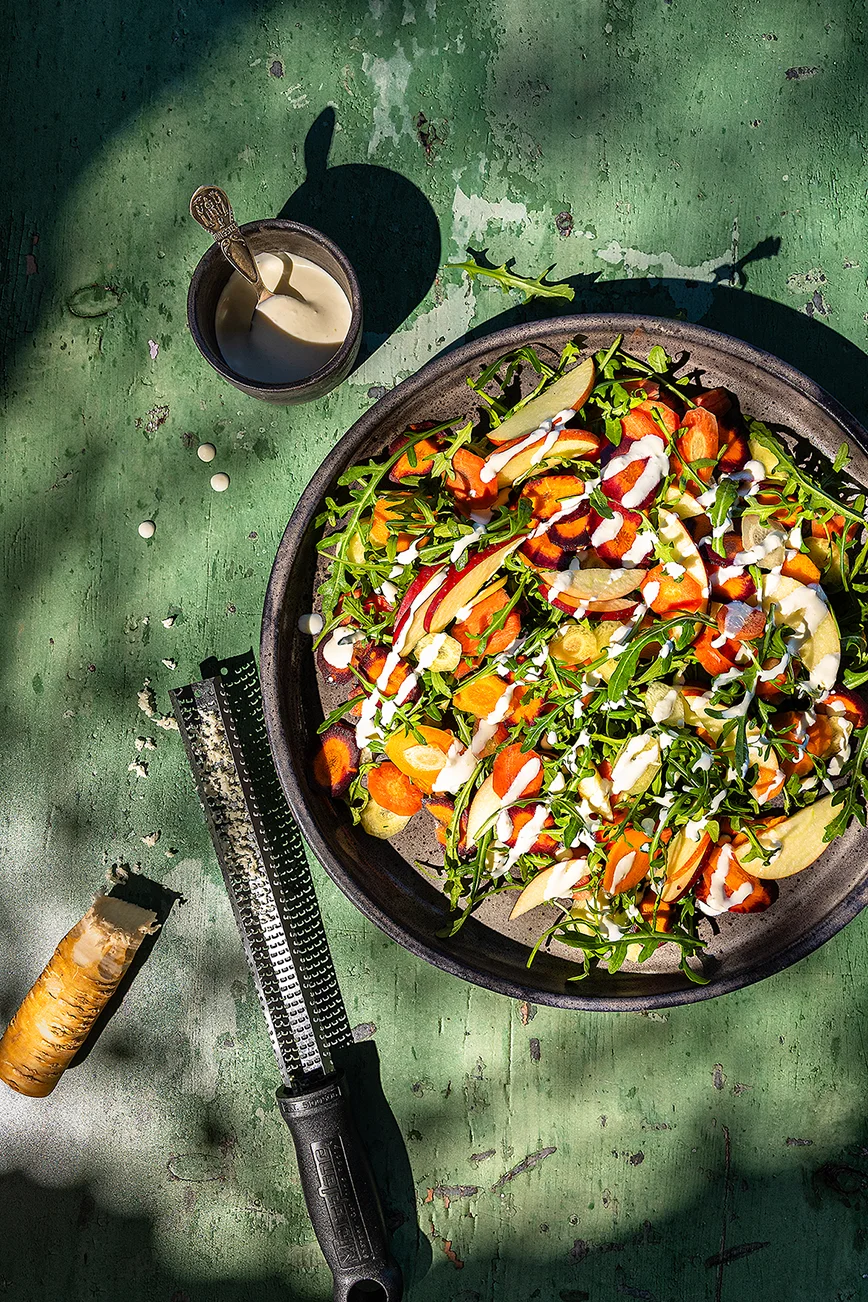
Nature was the main inspiration behind the visual style of the book.
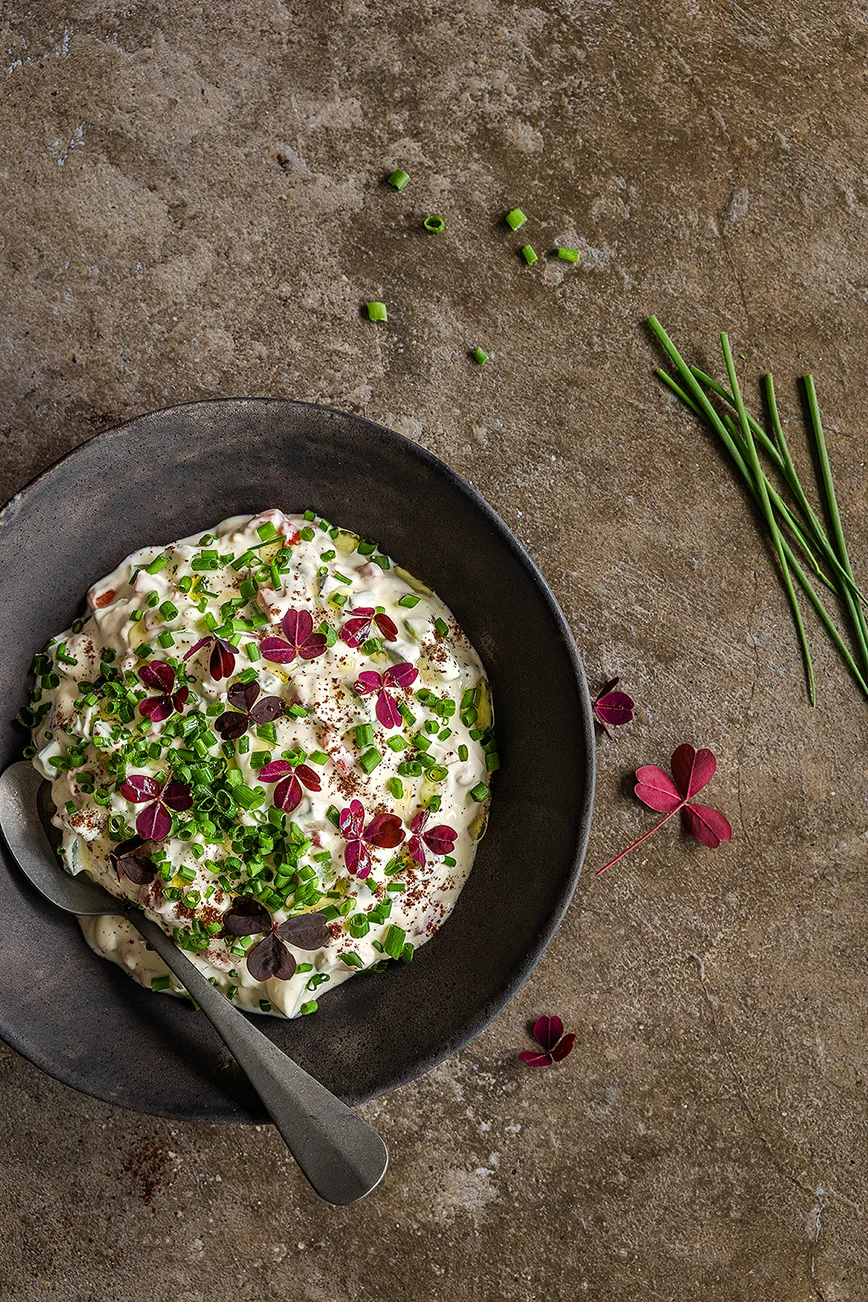
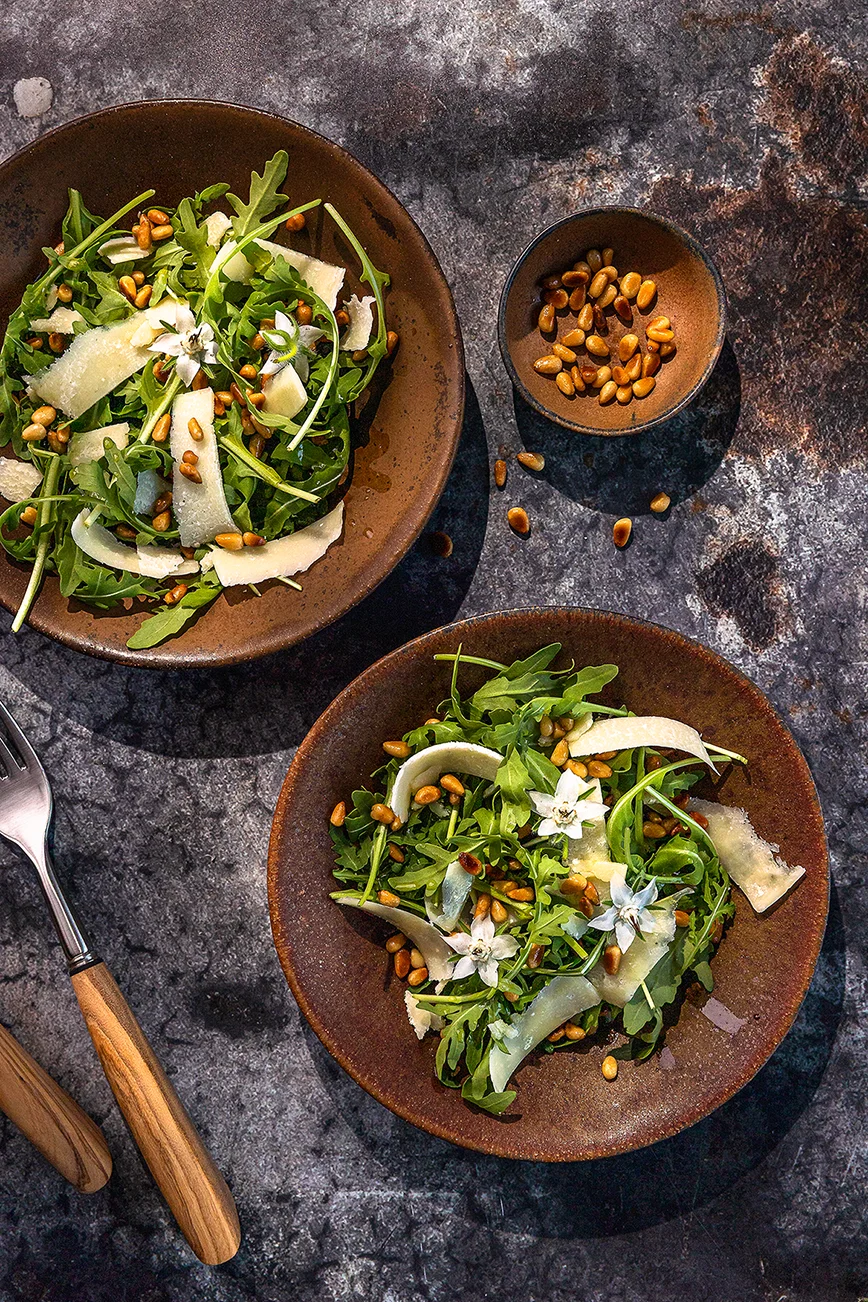
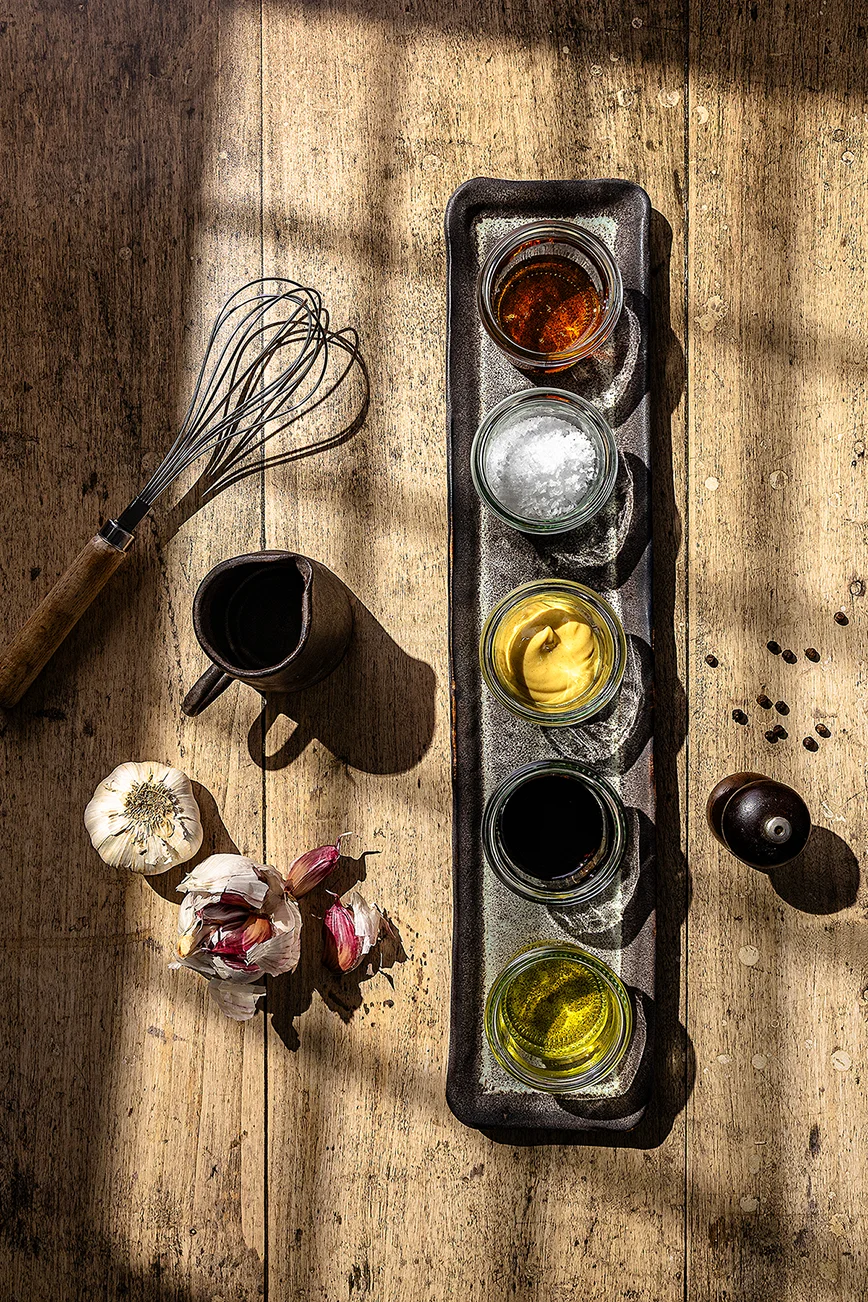
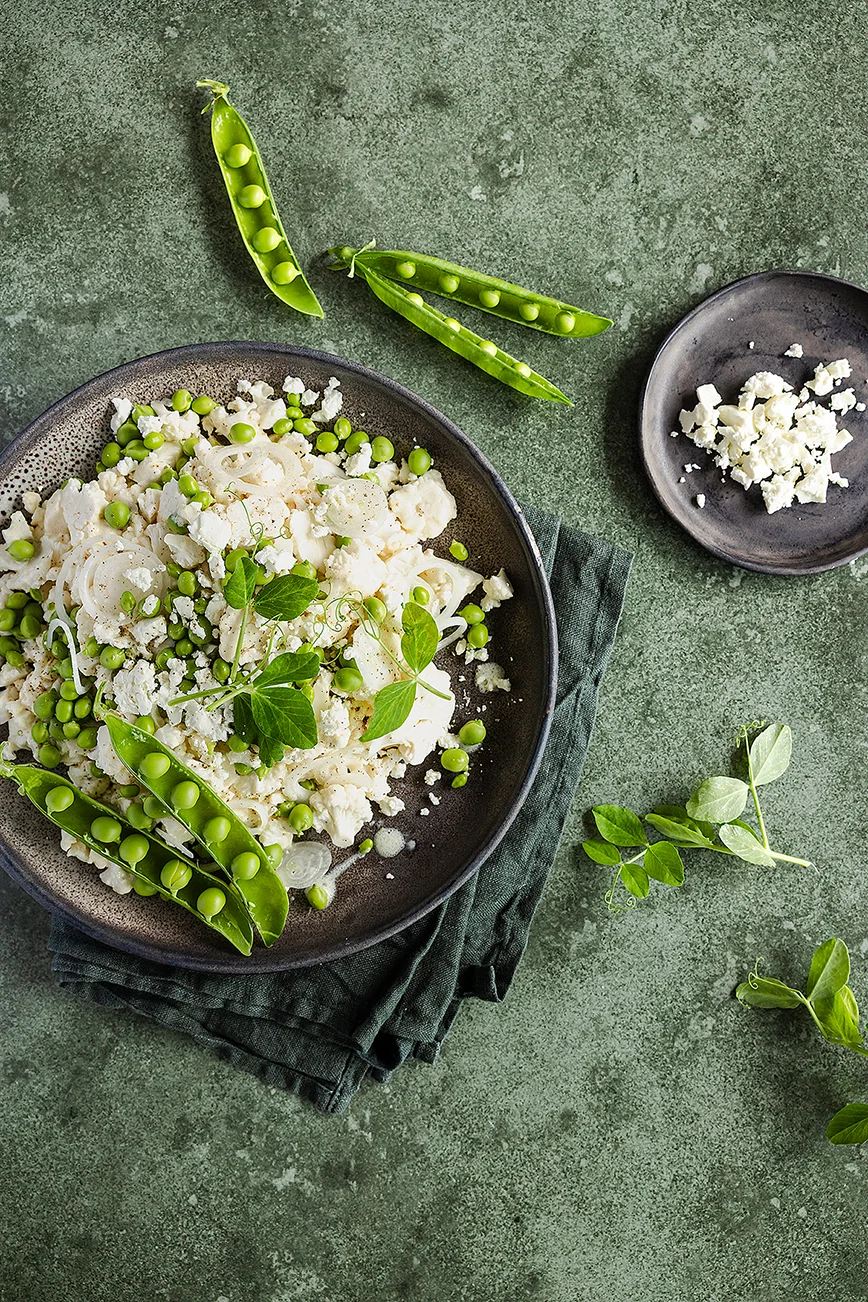
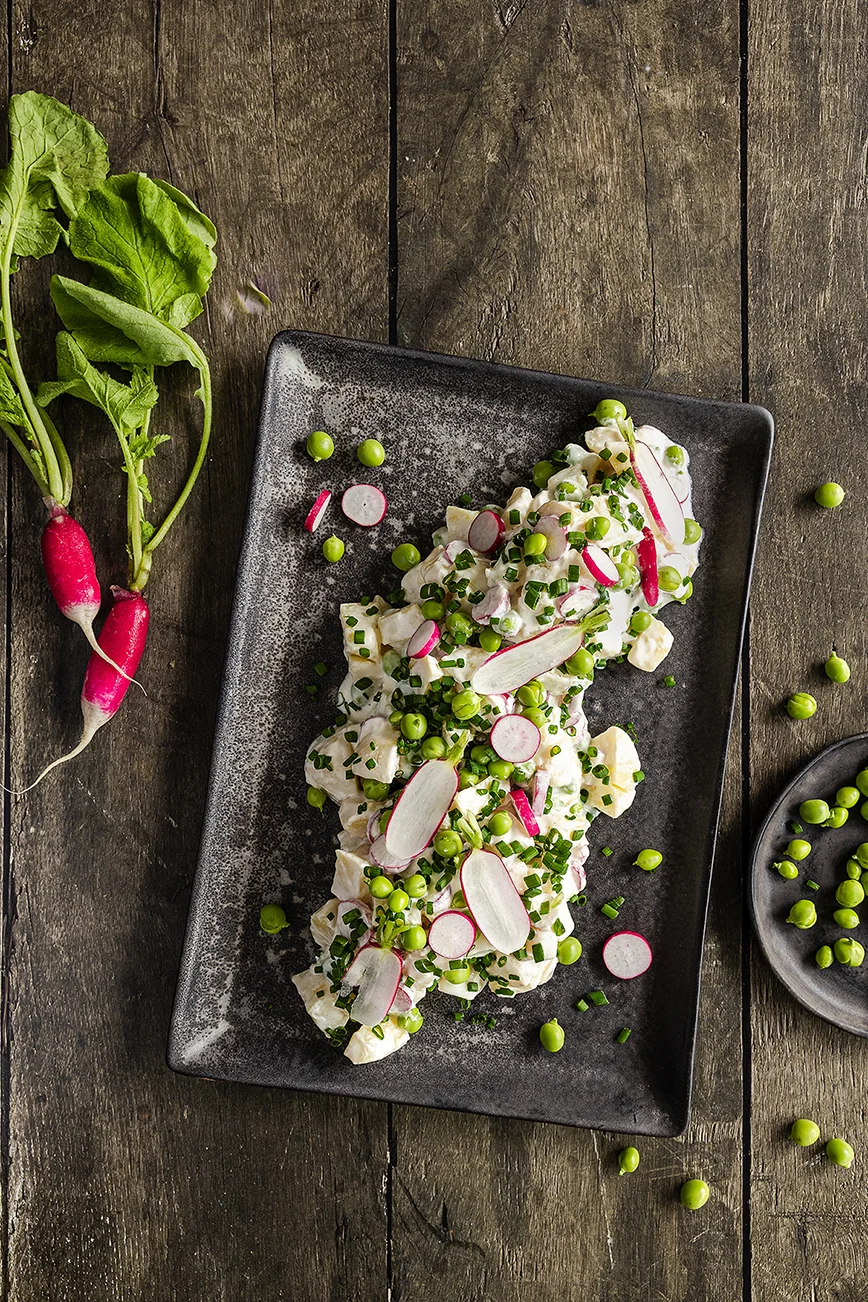
I wanted calm, sensory and natural images that celebrated beautiful ingredients. That is why the styling focused on natural colours such as green, brown and grey, as well as materials like stone and wood.
The backdrops played an important role in creating that atmosphere. We deliberately chose surfaces and colours inspired by nature — stone, wood, earthy browns, greens and greys — because they supported the ingredients without taking attention away from them. Many of the backdrops we used came from Errer and fitted perfectly into the natural and sensory expression we wanted for the book. The goal was always to create an atmosphere that felt natural, timeless and inviting.
Susanne Geert
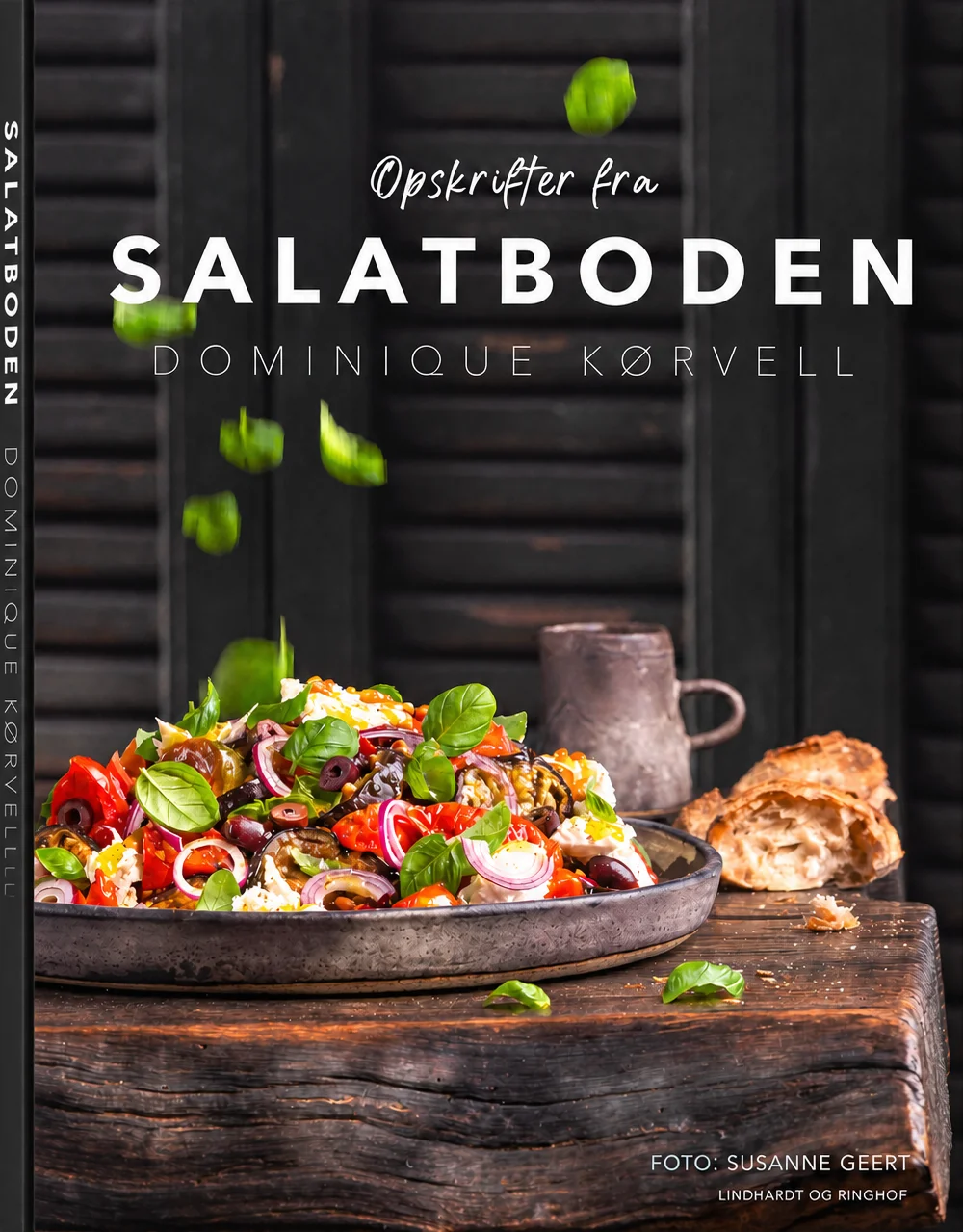
The core concept of Salatboden was to weave Dominique’s salad recipes together with her garden lifestyle and DIY projects—all done with a deep respect for her specific aesthetic. Dominique has an incredibly strong and powerful visual identity that never wavers, which made it wonderful to establish the guidelines for the book. The style idea was entirely rooted in a rustic, nature-based and calm aesthetic. We anchored the entire visual universe around raw, tactile elements like stone, wood, and Dominique’s beautiful handmade wooden dining table, which naturally made it to the book cover. Beyond the visuals, the real magic of this project lay in our collaboration. Dominique and I had a fantastic partnership with a seamless division of labor. We clicked from day one, and our creative energy just flowed perfectly together, which made the long shoot days feel like a joy rather than work. It was easy to let a valued friendship grow from this book project.
What inspires your creative work?
Dominique Kørvell
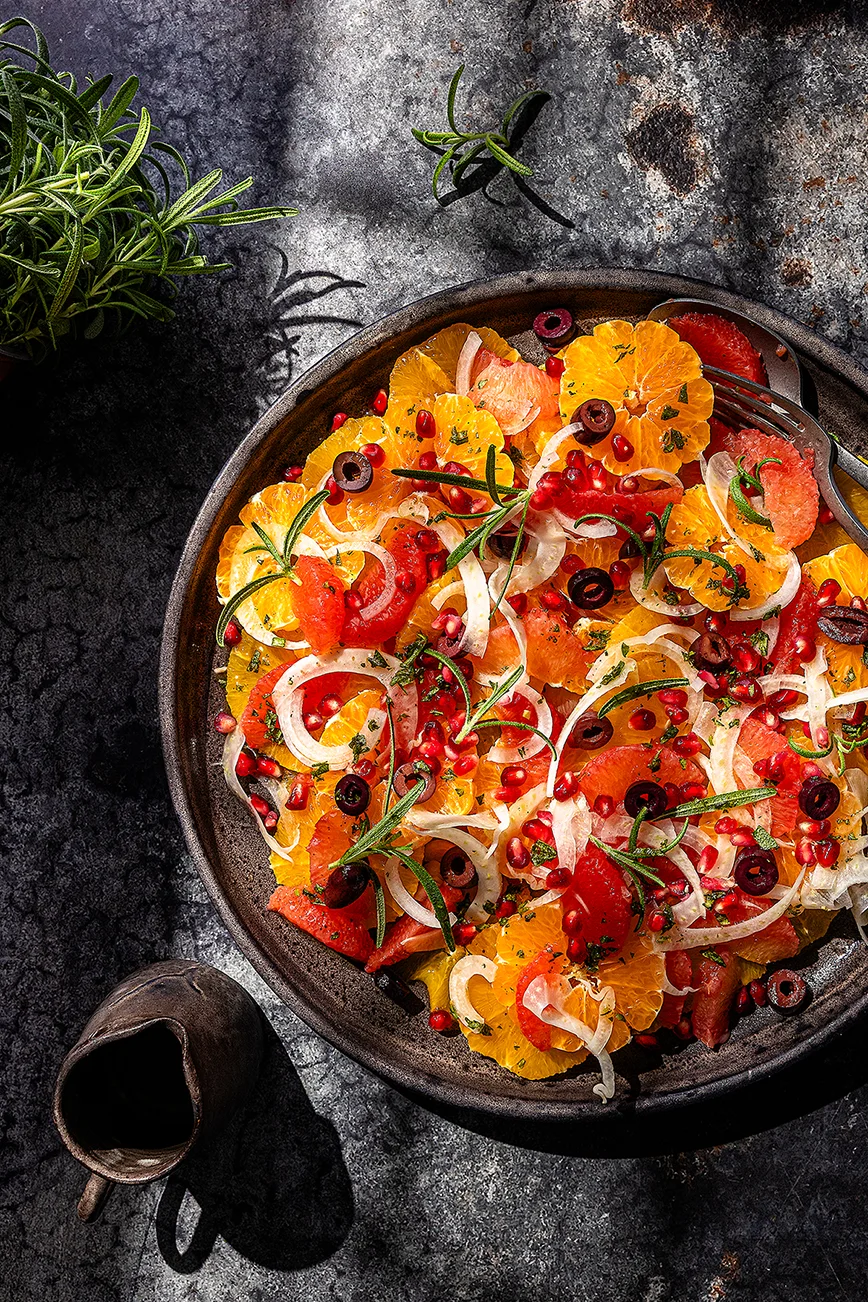
I am inspired by flavour, colour, shape and texture.
Nature is also a great source of inspiration. I love spending time outdoors, and many ideas come to me while walking in nature. The changing seasons, beautiful produce and natural colours all influence both my cooking and the visual universe around it.
I am also inspired by other countries and cultures. My mother was English and my husband was born and raised in South Africa. Perhaps that is why we have always been curious about food from other parts of the world, especially India, Thailand, Lebanon, Spain and Italy.
Susanne Geert
My greatest source of inspiration doesn’t come from looking outward at traditional art forms, nature, or classic trends. Instead, it comes from the internal synergy of working across food, product, and branding photography.
Food photography requires immense patience and detail. However, diving into product and packaging photography expanded my horizon in a different way.
Because you work with products that don’t change or wilt, it allows you to slow down and focus heavily on how light interacts with specific materials, textures, and branding details (as opposed to food photography, where you often have to work quickly once the food is on set). Bringing that deliberate focus on material and detail back into my food and branding work is what keeps my vision dynamic.
How do you make sure the photography reflects the book’s concept?
Susanne Geert
Having a background in corporate project management and branding strategy shapes how I manage a large-scale project like a cookbook. I approach it as a cohesive puzzle from day one. To align on mood, style, and colors, we started with an online meeting between the publisher (Lindhardt and Ringhof), Dominique, and myself.
Once production began, we shot weekly. A key method for maintaining the visual identity was keeping a strict plan of which recipes belonged to which chapters. This allowed us to constantly look at the bigger picture and ensure visual variety in our choice of backdrops, props, and styling, while still keeping the overall red thread intact.
How would you characterise your approach to cooking?
Dominique Kørvell
“Less is more” is a saying I have always loved.
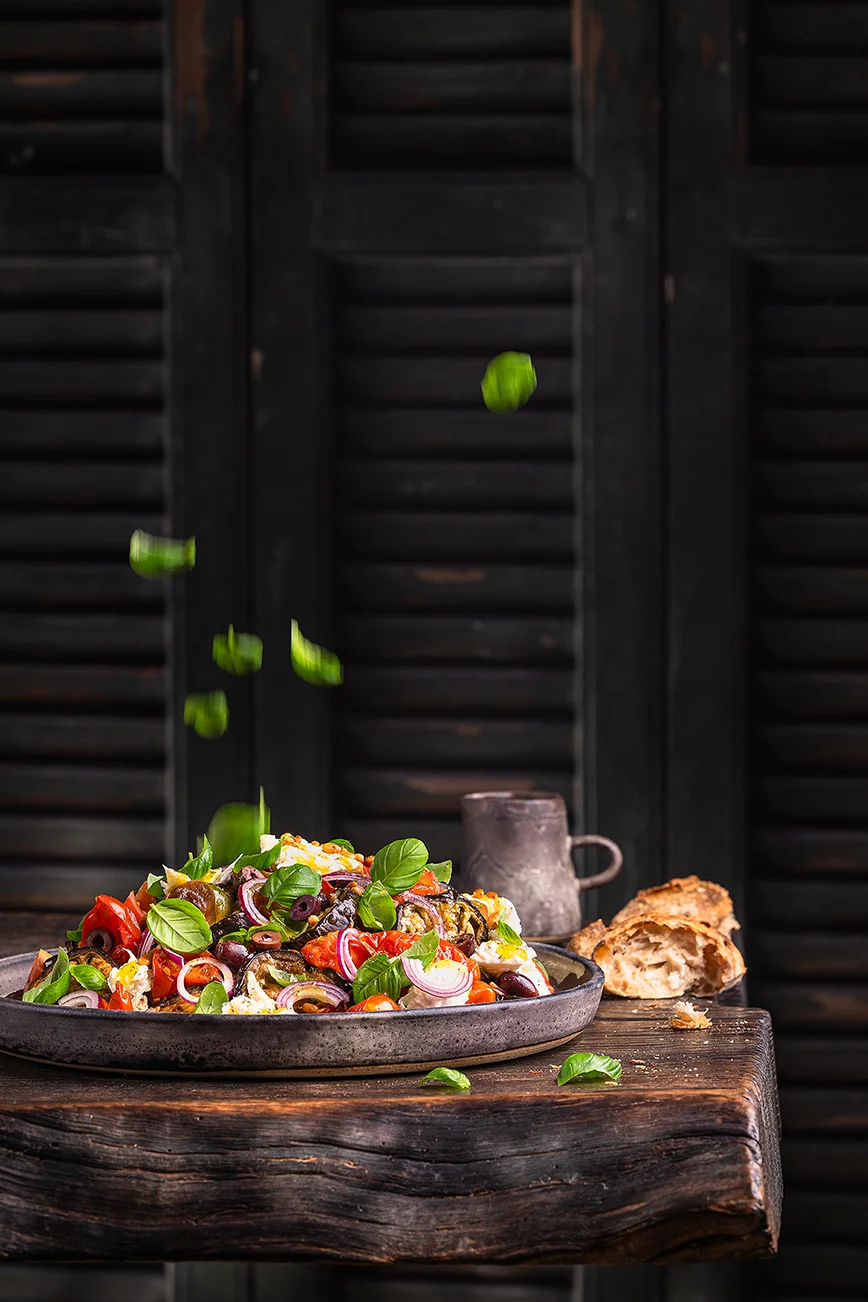
I enjoy simple food made from good ingredients. Take a tomato salad, for example. A perfectly ripe tomato, a good olive oil and a splash of sherry vinegar — that is one of the very best salads in the world if you ask me.
I believe good ingredients should be allowed to speak for themselves.
What does your preparation for book photography involve?
Susanne Geert
I always prepare thoroughly beforehand because it buys us creative freedom on set. When the technicalities are already sorted, it minimizes stress and allows us to focus entirely on the fun, creative part.
For Salatboden, we prepared by grouping the recipes logically before each shoot day, and as much as possible, we optimized our workflow through this division.
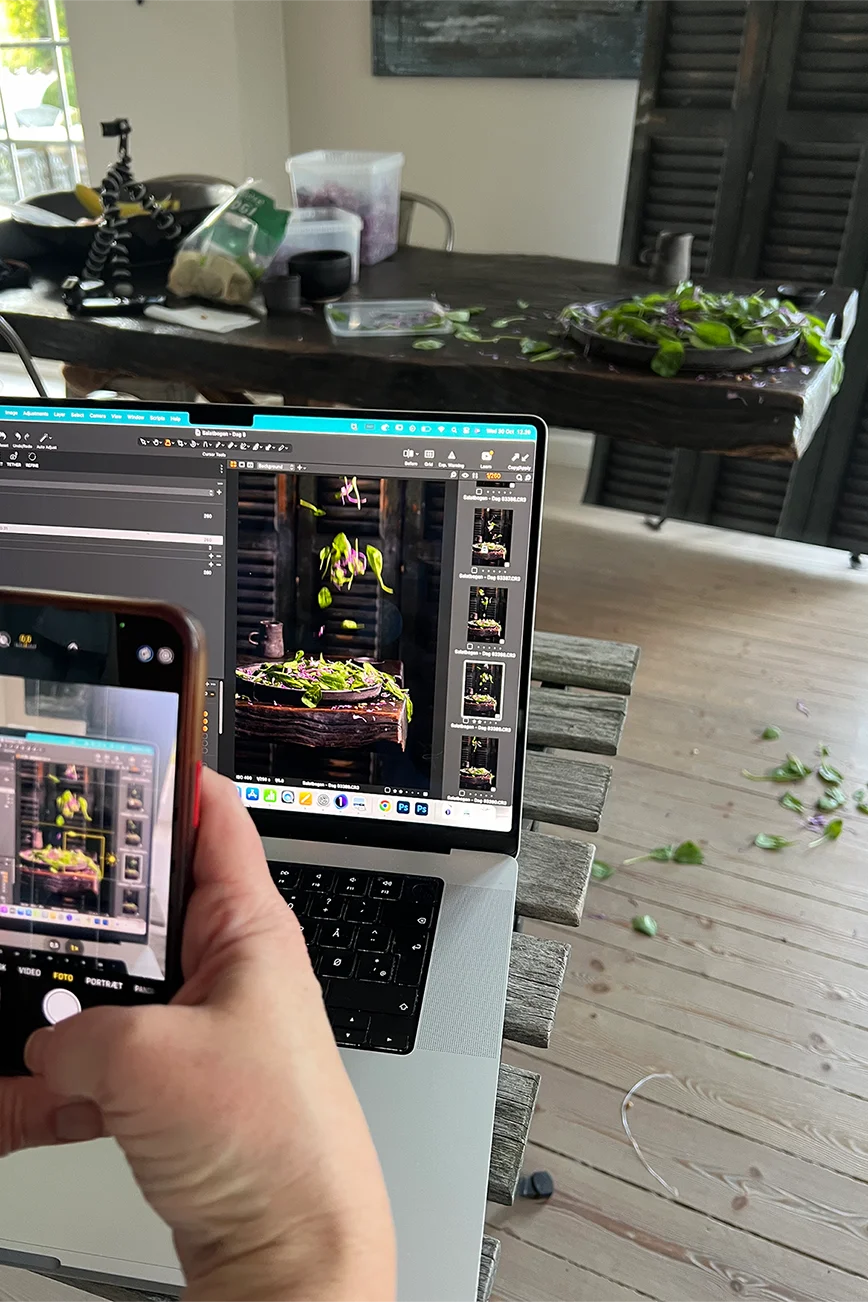
For instance, we structured days around camera angles, gathering top-down flat lays for one session and alternative angles for another. We did the same with lighting setups to minimize major changes during shoot day. This efficient approach kept us organized while leaving room for intuitive styling when fresh ingredients arrived.
Which lighting do you use for your photography: natural light, artificial light, or both?
Susanne Geert
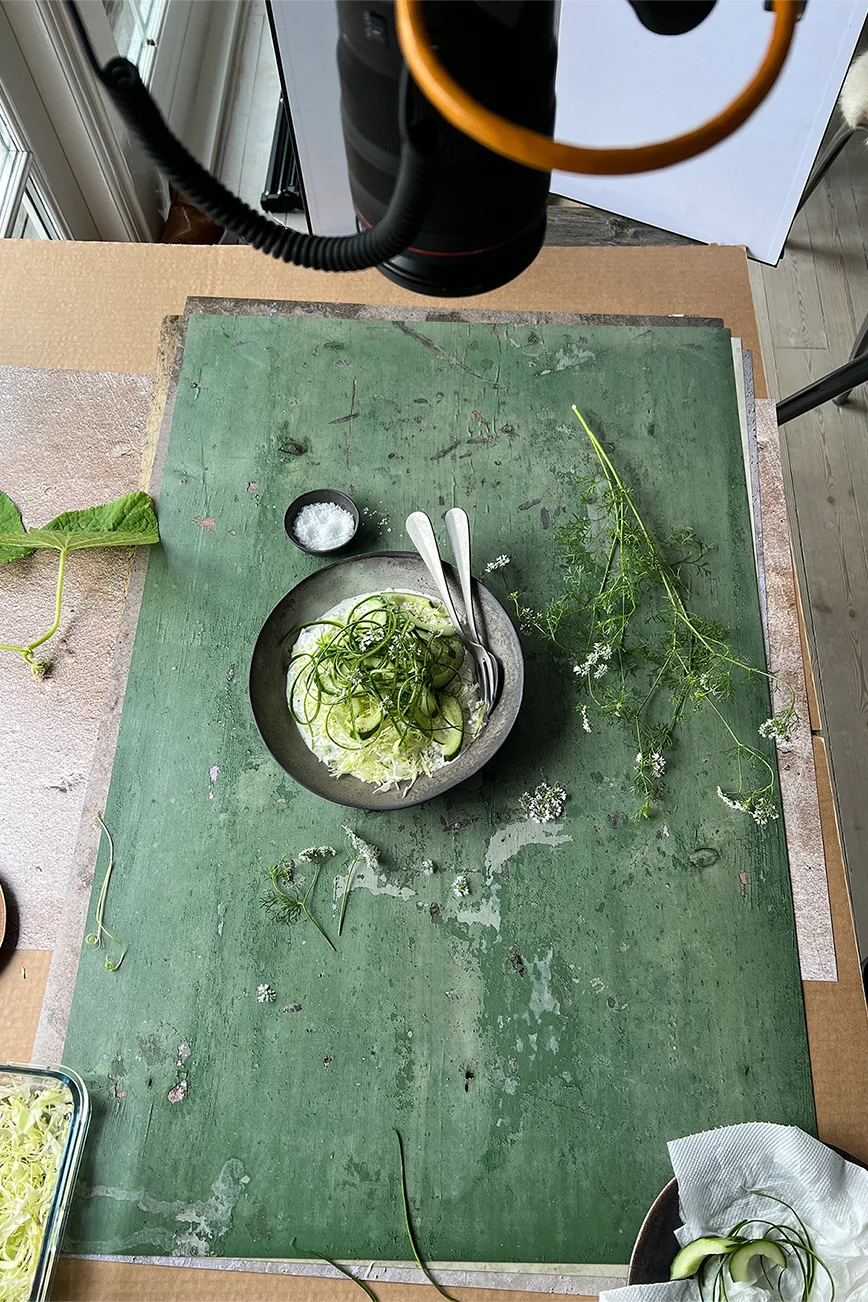
My approach to light is deeply connected to my transition into also working with product photography, as I mentioned earlier. To be honest, I felt ‘forced’ to improve my studio lighting skills when entering that genre. Photographing packaging and products really teaches you how light interacts with different materials, from matte textures to reflective surfaces.
It’s not that you can’t get product photography jobs without working with flashes, but mastering artificial light allows you to attract more complex and exciting assignments because you are no longer limited to the existing light in the room.
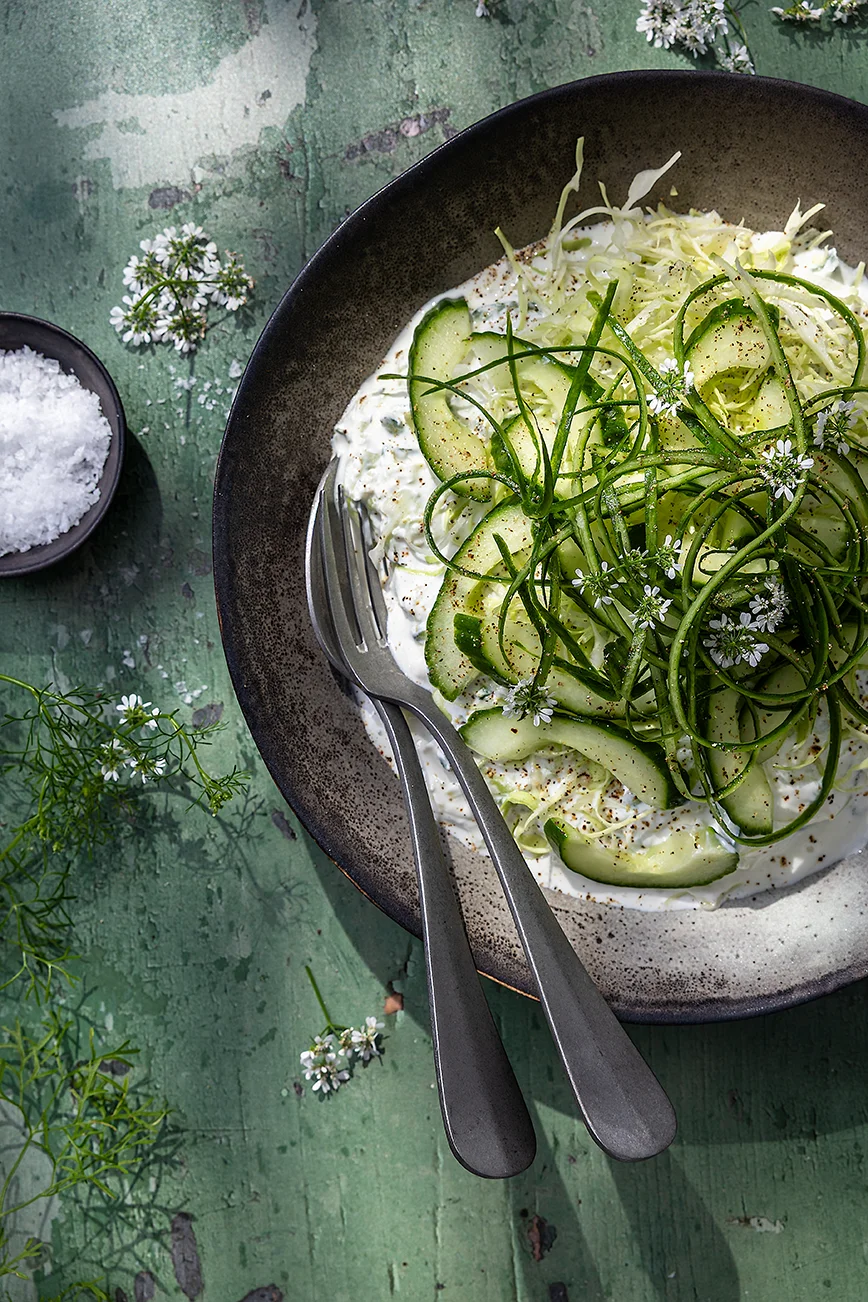
Learning to control the light completely reshaped my style. Today, my work is often characterized by an intentional play between light and shadow, often including deep, visible shadow effects for a three-dimensional depth.I often combine flashes with natural light to sculpt the scene and bring that vivid atmosphere into the frame.
What is your process for developing new recipes?
Dominique Kørvell
I LOVE salads, and creating recipes has always come naturally to me.
Ideas pop into my head like brown mustard seeds hitting hot oil in a frying pan. And just as a little side note: if you have never tried that in your kitchen, you are definitely missing out!
Recipe ideas come to me while walking in nature, driving the car, waking up in the middle of the night or doing everyday things. My biggest challenge is not coming up with ideas. My biggest challenge is finding the time to cook, film and photograph them all.
What made you choose our photography surfaces for Dominique’s book?
Susanne Geert
When selecting backdrops for a major cookbook project like Salatboden, my choice is firstly driven by the specific motif and visual narrative. We used a mix of surfaces for this book, including Dominique’s own handmade wooden table, but we needed backdrops that could seamlessly complement that authentic look.
I chose Errer backdrops because your specific beautiful designs and textures provided the exact organic feel we were looking for. The raw, stony, and rustic motifs allowed me to bring the essence of nature and the outdoors directly into the studio, perfectly bridging the gap between Dominique’s garden lifestyle and her recipes.
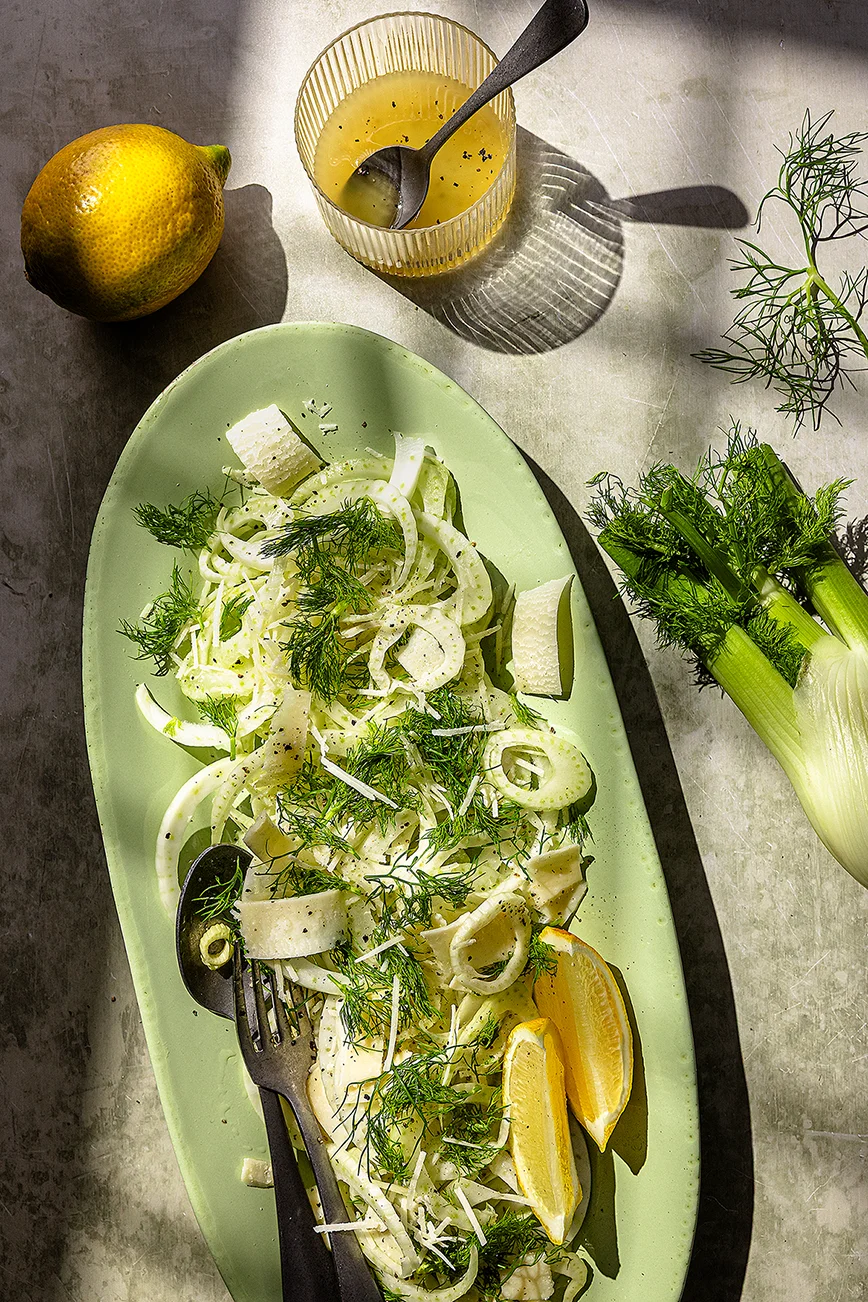
How did Susanne Geert become involved in the photography, and how did you collaborate throughout the project?
Dominique Kørvell
As I write in the book:
“Thank you, Susanne, for creating the most beautiful photographs. Your wonderfully nerdy attention to even the smallest detail has elevated this book beyond what I had hoped for.”
Before the book project began, I discovered Susanne’s Instagram profile by chance. I thought she created the most beautiful photographs and started following her for inspiration.
When Lindhardt & Ringhof first approached me about publishing a cookbook, we discussed how cookbook photography is normally done. It usually involves very long photography days, and unfortunately I had to decline. I live with MS and cannot stand or walk for extended periods of time.
We discussed the possibility of me photographing the book myself, but I knew that if I were to publish a book, it had to be a beautiful book with professional photography.
By chance, I ended up talking to Susanne about the situation. She showed great empathy and was willing to adapt the process so that the photography days could be shorter and manageable for me. I presented the idea to the publisher, who was equally understanding and supportive.
That was how our collaboration began, and I honestly could not have wished for a better solution.
The photography days with Susanne were fantastic. She immediately understood the mood and atmosphere I wanted to create, which meant that we complemented each other very well and had the best collaboration I could have hoped for.
Her remarkable attention to detail and her ability to work creatively with light added an extra dimension to the photographs and helped bring the entire book to life.
If I ever publish another book, there is no doubt that Susanne Geert will be my photographer once again.